
With our eldest having gone through a private preschool, stepping into the world of MOE Kindergartens felt like entering completely new territory. We were hoping to enrol YB in the same school premises as his sister, so when we saw that our preferred MOE K was holding an open house, we quickly registered — and I’m really glad we did.
Before attending the open house, I had tried looking for more information on MOE Kindergartens — but found that most of what’s available comes from official sources. While helpful, it was hard to get a sense of what it’s really like from a parent’s perspective.
The event itself was well-planned and thoughtfully structured, which really helped us get a comprehensive feel for the programme. It was split into two main parts: a talk in the school hall, followed by a self-guided tour around the premises.
The MOE Kindergarten curriculum
We first gathered at the primary school hall, where the centre head gave an engaging and informative presentation. It was our first proper look into the MOE Kindergarten curriculum. The curriculum is designed and written by the Ministry of Education, which means it aligns closely with what children will experience in Primary 1, making the transition smoother and more intentional.
It covers six key areas: language and literacy, numeracy, motor skills, aesthetics and creative expression, social-emotional development and discovery of the world — all taught through play-based, integrated learning.
We liked how lessons are grounded in local context, with Big Books and familiar themes that help children relate to what they’re learning. There’s also a strong focus on character building and life skills, like learning to work with others and gaining confidence.
One standout feature of the curriculum is the Weeks of Wonder (WoW) projects. These are child-led explorations where children investigate topics that spark their curiosity. One standout feature of the curriculum is the Weeks of Wonder (WoW) projects. These are child-led explorations where children investigate topics that spark their curiosity.
And as a practical life skill, we loved that in the final six months of K2, children get to visit the school canteen with a small amount of pocket money to practise buying food on their own. Now, K2 students from private preschools usually partner with primary schools for this activity, but MK students get to do this is the primary school they’re likely to enter.
Later on, we were also informed that the curriculum details will be uploaded on the school website, so parents can go through everything again at their own pace.
The KCare provider also gave a short talk, walking us through the daily schedule that children would follow if they attend KCare before or after their MK session. It gave us a clearer picture of what a full day might look like — especially helpful for working parents or those looking for a more extended routine for their child.
A look at the classrooms and environment
We were then guided to tour the classrooms at our own pace.
At the MK we visited, the classrooms aren’t air-conditioned — but they didn’t feel stuffy or uncomfortable at all. In fact, the space felt open, airy and breezy, with large windows and plenty of ventilation from ceiling and wall fans. It made sense once we saw the layout — everything felt thoughtfully designed, from the way natural light streamed in, to how the different learning areas were set up.
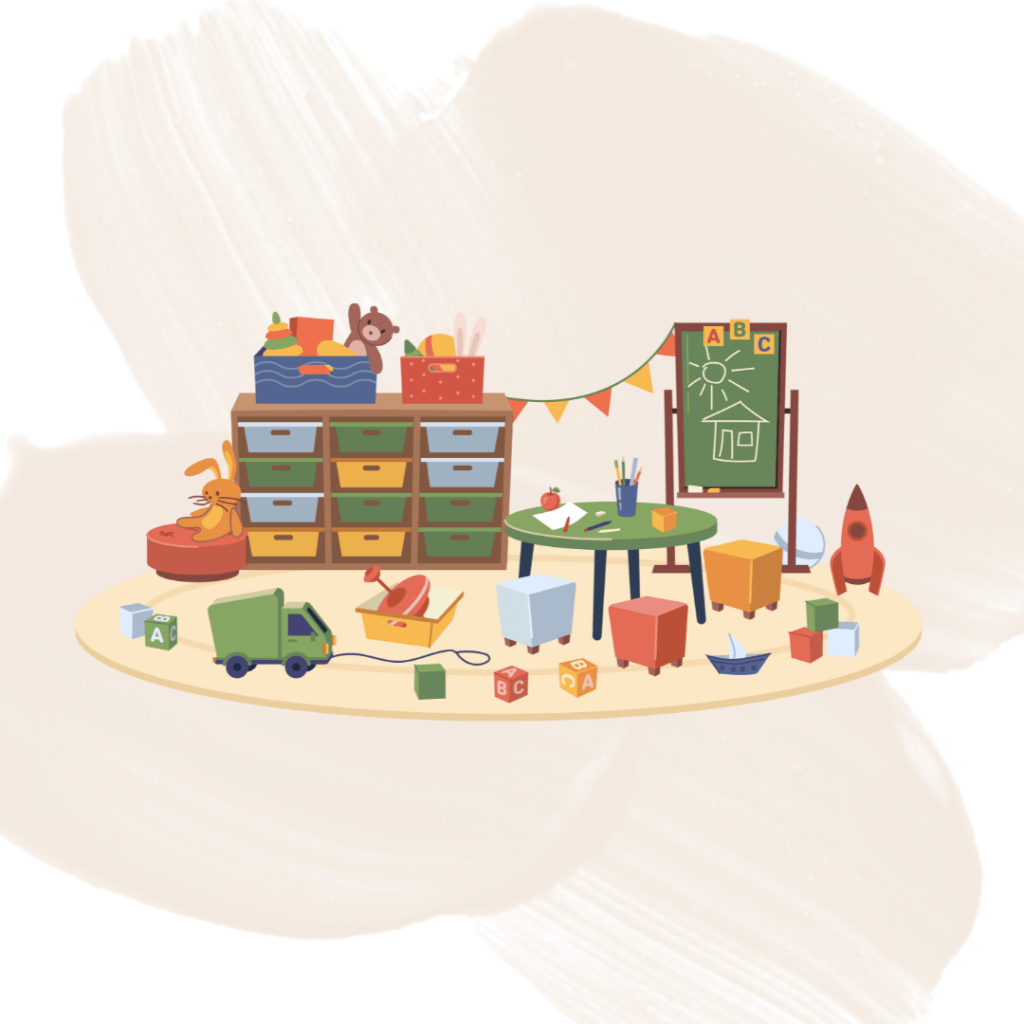
Each classroom was thoughtfully arranged with clear zones for reading, hands-on exploration, creative play, and quiet time. Child-height shelves held books and materials within easy reach to encourage independence, while tables were grouped to support both solo and group work.
Outside, we were genuinely surprised to find an outdoor play area that could rival a private preschool — complete with a large playground, water play zone and sand play area. The staff explained that as MK is located within a primary school, they benefit from ample space.
We also learned that this brings other benefits: the children go on walks to a nearby sensory garden, pass by the canteen everyday and grow up feeling familiar and comfortable with the primary school setting — something that can really help ease the transition to Primary 1. at the end of K2, they also get to use the school hall for their graduation ceremony.
All in all, we walked away feeling very reassured and happy with the environment.
Session timing
MOE Kindergarten (MK) sessions typically offer either a morning session from 8am to 12pm or an afternoon session from 1pm to 5pm. These sessions provide a 4-hour K1 and K2 programme.
For parents who need longer care hours, there’s the option to enrol in KCare, which provides before- and/or after-school care. KCare can start as early as 7:00 AM and extend till 7:00 PM, with a structured routine that includes meals, rest time, enrichment activities and free play.
It’s good to note that while you can indicate a preference for the morning or afternoon session during registration, session allocation is subject to availability — so there’s a chance you may be offered the less preferred slot if demand is high.
Locations
You can check the full list of MOE Kindergarten locations and their affiliated primary schools on the MOE Kindergarten website.
Fees & subsidies
MOE Kindergarten fees are $160 per month for Singapore Citizens, before any subsidies. For eligible families, financial assistance is available to help ease the cost.
KCare, which provides before- and after-school care, is optional and charged separately, with additional subsidies available depending on household income.
The centre head also shared that field trips are kept free or affordable, and even for graduation, there’s no need for additional spending — children wear their school uniforms, and the ceremony is held in the primary school hall. It’s a thoughtful, low-stress approach that keeps things simple and meaningful without extra cost to families.
The registration process
If you’re considering MOE Kindergarten, keep a lookout for open house dates and registration periods. Online registration typically open around February each year for K1 admission the following year.
We registered online through the MOE Kindergarten website, which was a straightforward process. We received notification of our successful application around mid-April, after which we simply accepted the offer.
To choose MK or not
Many parents find themselves wondering whether to choose an MOE Kindergarten — especially if their child is already in a private preschool or childcare centre.
For us, we stayed with a private preschool for all six years with our eldest because we were genuinely happy with the school. She had wonderful teachers and friends, and being an extrovert, we always felt that even if she were suddenly “plonked” into Primary 1, she’d survive — and thrive.
But with our younger one, the decision felt different. As the elder one was already in primary school, it made more logistical sense to put both in the same premises just walking distance from home.
He’s also a little more sensitive by nature, and while he’s also very happy in his current preschool, we felt that he would benefit from a slower, more familiar transition into Primary 1. Since many children in MK move on to the affiliated primary school together, they often form friendships early on, which can help ease that big change later on.
Of course, there are other considerations too — like location, care arrangements and your child’s personality and needs.
MOE K vs Private Preschool: What’s the Difference?
MOE Kindergarten
Curriculum developed by MOE and aligned with Primary 1.
Half-day sessions, with optional KCare
Class size up to 20 children, with 2 teachers
Co-located with primary schools; non-air-conditioned but breezy and spacious
Large play areas; some include water/sand play zones
No extra paid enrichment
$160/month for Singapore Citizens (before subsidies), with financial assistance available for MK and KCare
Financial assistance available for MK and KCare
Affordable: uniform-only ceremony in school hall; field trips kept free or low-cost
Children often move on together to affiliated primary school
Private Preschool
Varies by school; may follow Montessori, Reggio Emilia or other approaches
Full-day or half-day options, depending on centre
Often smaller classes, especially in boutique or premium centres
Air-conditioned classrooms; varies by centre design and style
Outdoor spaces varies widely
Enrichments are paid add-ons like phonics, music or drama
Fees varies but are typically higher
ECDA subsidies available; amount depends on programme type and income
Graduation ceremonies may involve formal ceremonies, costumes or photography packages
Friends may split up for Primary 1 depending on school choices
Official MOE Kindergarten website
Main page about MKs:
https://www.moe.gov.sg/preschool/moe-kindergarten
Curriculum & learning environment
Details about the six learning areas, Weeks of Wonder and learning through play:
https://www.moe.gov.sg/preschool/moe-kindergarten/curriculum-and-learning-environment
MK locations and affiliated primary schools
Search by region to find your nearest MK and see which primary schools they’re located in or linked to:
https://www.moe.gov.sg/preschool/moe-kindergarten/our-locations
Registration information
Overview of the registration process and timeline (usually in February):
https://www.moe.gov.sg/preschool/moe-kindergarten/registration



 This Little Season