
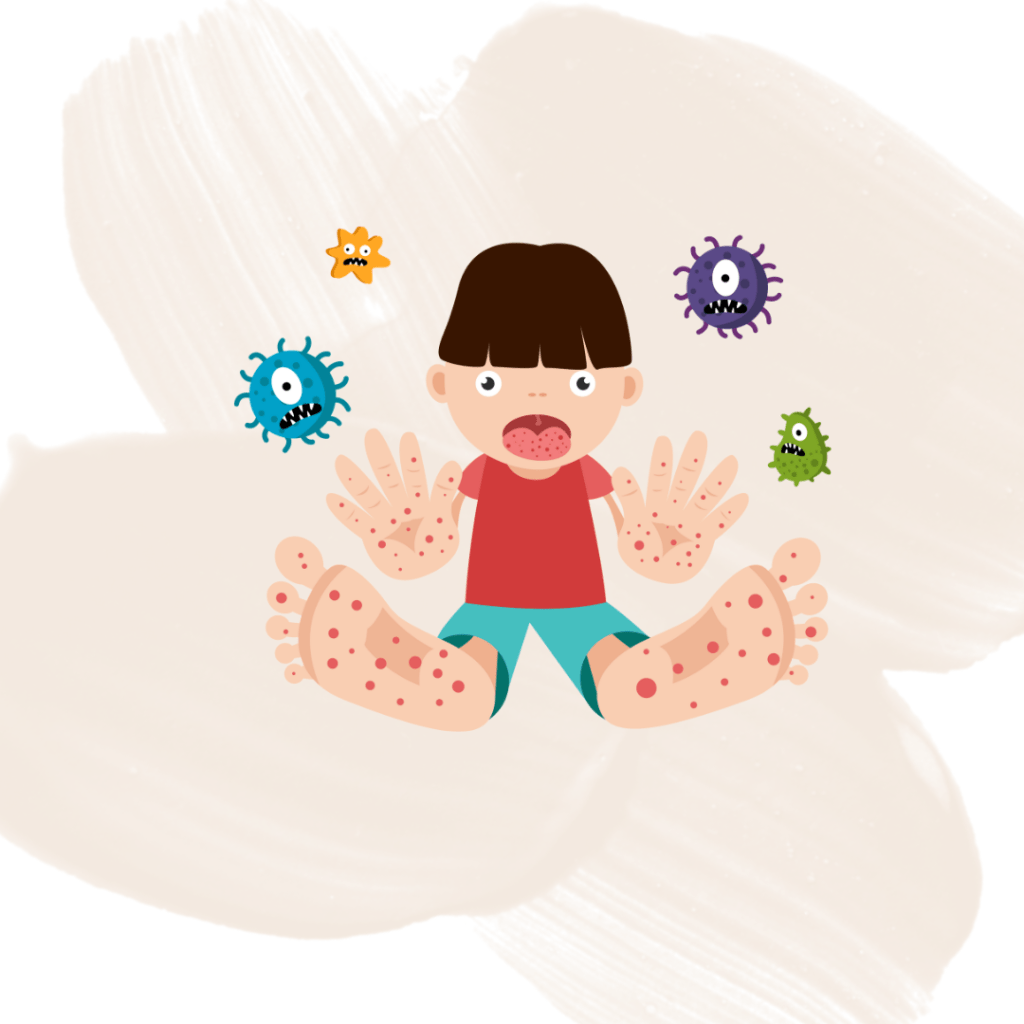
It often starts with a fever. Maybe your child doesn’t want to eat. Then comes the sore mouth, the red spots, the dreaded preschool notification. You’ve heard of HFMD before, but when it finally lands in your home, it can feel overwhelming.
This isn’t a medical guide — just a gentle collection of what many of us mums have learned along the way. If you’re here in the thick of it, you’re doing your best — and that matters more than anything.
What is HFMD?
Hand, Foot and Mouth Disease (HFMD) is a highly contagious viral illness that affects young children. It’s common in preschools across Singapore. While most cases are mild, it can still be tough on little ones — and their parents (besides the caregiving, it’s extra tough when we catch it too!)
Common symptoms include:
- Fever (usually the first sign)
- Painful mouth ulcers
- Rashes or blisters on hands, feet or buttocks
- Poor appetite
- Fussiness or fatigue
Please keep your child home
Once your child has been diagnosed with HFMD by the doctor, it’s important to keep him or her at home to rest and recover. Most doctors will issue a medical certificate (MC) for around 5 to 7 days — this is the typical contagious period, even if your child seems to be feeling better or exhibit no obvious symptoms after a couple of days.
Do also inform your IFC, preschool or childcare centre. They’ll appreciate the heads-up to notify other parents and schedule a thorough cleaning of shared spaces and toys, which helps contain the spread.
We understand that staying home for a week can be especially challenging for working parents, especially without extra help. But HFMD spreads very quickly, and isolation during this period really does make a difference — for your child’s health, and for others in the community too.
What helps (and what to expect)
Keep your child comfy
There’s no specific cure for HFMD — it’s a viral illness that is self-limiting, which means it usually clears up on its own. Most children recover fully within 7 days. In the meantime, the focus is really on helping your child feel as comfortable as possible while their body fights off the virus.
Dress your child in light, breathable clothing and let them rest in a cool, quiet space. If they’re itchy or uncomfortable from the rash, talk to your doctor about suitable creams or antihistamines to ease the irritation.
If your child has a fever, your doctor may recommend paracetamol to help bring it down and keep them more comfortable. Fever is the body’s natural response to fighting off a virus, but high temperatures can make little ones feel extra cranky, lethargic, or even trigger febrile seizures in some cases.
Soft, cold foods like yoghurt, ice cream and popsicles, as well as cooled porridge or mashed fruit can be easier to swallow. My kids tend to reject most solid foods, but would happily lick our homemade popsicle or an ice cream cone! Naturally, avoid anything spicy, acidic or salty as that might sting the ulcers.

Hydration is key
Keeping your child well-hydrated is one of the most important things you can do during HFMD. With a sore throat or painful mouth ulcers, many children may refuse to drink or eat — but staying hydrated helps the body recover, keeps fevers in check, and reduces the risk of complications.
Offer small sips of water frequently throughout the day. If plain water is too uncomfortable, try alternatives like cold diluted apple juice, barley water or clear broths. Some parents find that giving liquids with a straw or spoon helps — it feels more manageable than facing a full cup or bottle.
Cold drinks and icy treats like homemade popsicles can also soothe sore mouths while helping with fluid intake. If your child isn’t eating much, hydrating foods like watermelon, jelly or soup can offer some comfort too.
Watch for signs of dehydration, such as dry lips, fewer wet diapers, dark urine or unusual tiredness. If you’re concerned, do check in with your doctor — sometimes children may need electrolyte solutions to rehydrate properly.
It can feel like a balancing act, but offering fluids in creative, gentle ways makes a big difference in helping your little one bounce back.
Sanitise the house
HFMD spreads easily through saliva, nasal mucus, fluid from blisters, and even stool — so a good round of cleaning helps stop the virus in its tracks. It’s not just about your child’s toys and surfaces they’ve touched, but also things you might not think of straightaway.
Start with high-touch surfaces: wipe down tables, chairs, doorknobs, remote controls, light switches, and bed rails with disinfectant. Use a child-safe disinfectant or a diluted bleach solution (about 1 part bleach to 10 parts water) for non-porous items. For soft toys, check if they’re machine washable — if yes, give them a spin with hot water. Sun-drying is a bonus!
Clean and disinfect potty seats, toilet flush handles, and bathroom surfaces regularly, especially if your child is still in diapers. Don’t forget shared items like towels, cups, and eating utensils — it’s best to give your child their own set while they’re recovering.
You don’t need to go overboard, but regular cleaning over the week helps reduce the risk of the virus lingering and re-infecting anyone else in the household.
It’s a bit of extra effort during an already tiring time, but it’ll give you peace of mind — and hopefully keep the rest of the family HFMD-free.
Keep siblings apart (if you can)
We know this one’s tough — especially if your kids are close in age or share a room — but try your best to limit contact between your sick child and their siblings during the contagious period.
Use separate towels, cutlery, water bottles, and even sleeping spaces if possible. HFMD spreads easily through saliva and contact with surfaces, so minimising shared items helps protect the rest of the family.
Even after the fever goes away, your child may still be contagious for a few more days. It’s best to err on the side of caution and wait until all blisters have dried up and your child is back to their usual self before allowing close contact again.
If separation isn’t realistic (we get it — not everyone has a spare room), focus on extra hygiene: hand-washing before and after meals, disinfecting shared surfaces, and reminding everyone not to share food or drinks. A bit of temporary distance now can help avoid a domino effect of illness through the household.
Don’t rush recovery
Even if your child seems back to normal — eating, playing, and fever-free — HFMD can still be contagious for up to a week or more. That’s why most preschools or childcare centres will require a doctor’s clearance letter before allowing your child to return.
It’s important to note that some schools may only accept a clearance from the same doctor who issued the original diagnosis. This is to ensure continuity in the assessment, so do check with your centre before heading to any available GP or clinic.
While it can be tempting to rush back to routine (especially if you’ve been juggling work and care duties), giving your child the full recovery window helps prevent further spread — and ensures they’re truly well enough to rejoin the group. A few extra days at home might feel long, but they make a big difference in keeping everyone safe.
Take care
It’s also worth noting that there are many different strains of the viruses that cause HFMD.
My child has had HFMD more than once — and surprisingly, one of those times, he didn’t even have a fever. The doctor explained that this might be because he had previously caught the same or a very similar variant of the virus. His immune system had already “seen” it before, so his body was able to mount a quicker response, resulting in milder symptoms. So don’t be surprised if symptoms vary from case to case — or even from one infection to the next in the same child.
HFMD can feel long and tiring, but it usually passes within a week. Some days, your child might cry over porridge or cling to you all afternoon. Some nights may feel endless. But day by day, your little one will start to feel better — and before you know it, you’ll both be through the worst of it.
Little Notes
From one parent to another — these home remedies might help!
Chilled coconut water: Gentle, hydrating and comforting on sore mouths!
Popsicles or ice cream: This is not the time to hold off on ice cream! Popsicles and ice cream are great for hydration and pain relief when your child has no appetite due to their mouth ulcers. **Please note that ice cubes can be a choking hazard, so do avoid.
Tangyuan or plain mini riceballs: One surprising food my 5-year-old child could manage during HFMD was plain mini rice balls—the frozen, colourful kind without any filling. I served them lukewarm and soft, and they were easy to swallow despite the mouth ulcers. Do be cautious with younger children, as these rice balls can be a choking hazard. Cut them into smaller pieces or skip them entirely if you’re unsure.
Lukewarm sponge baths: These can help to soothe fevers or fussiness. You can also use soft hand towels to pat the affected areas gently.
✨ Got your own tip that worked wonders? Let us know! We’re all learning from one another.
DISCLAIMER:
This post is written from one parent to another, based on lived experiences. It’s meant to offer comfort and support — but not to replace medical advice. If you’re unsure about your child’s symptoms or care, please consult your doctor or a healthcare professional you trust.







 This Little Season